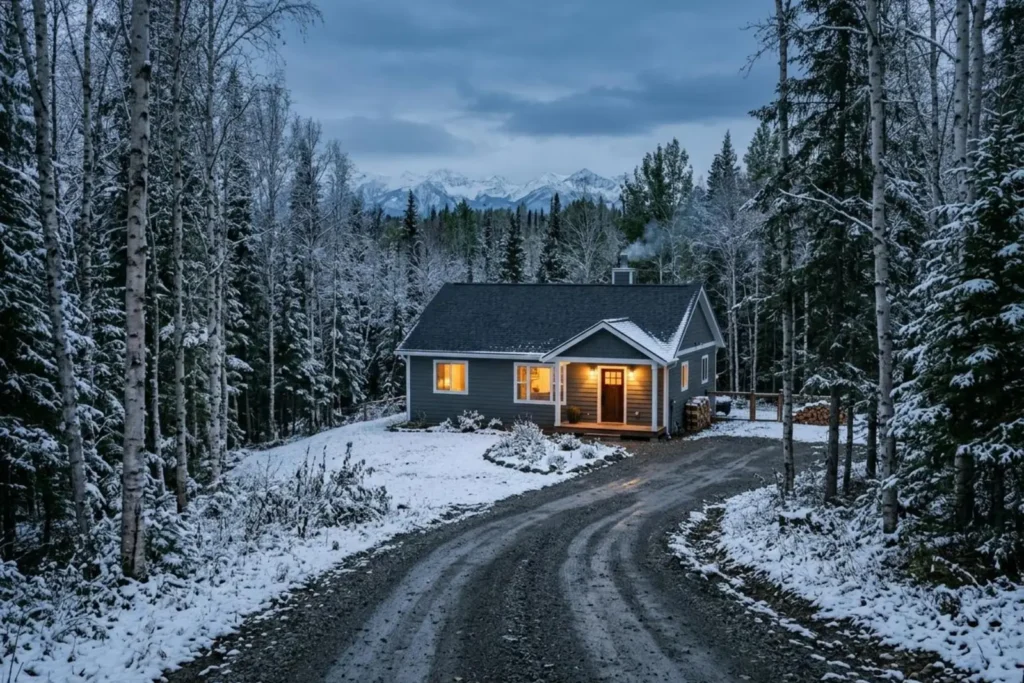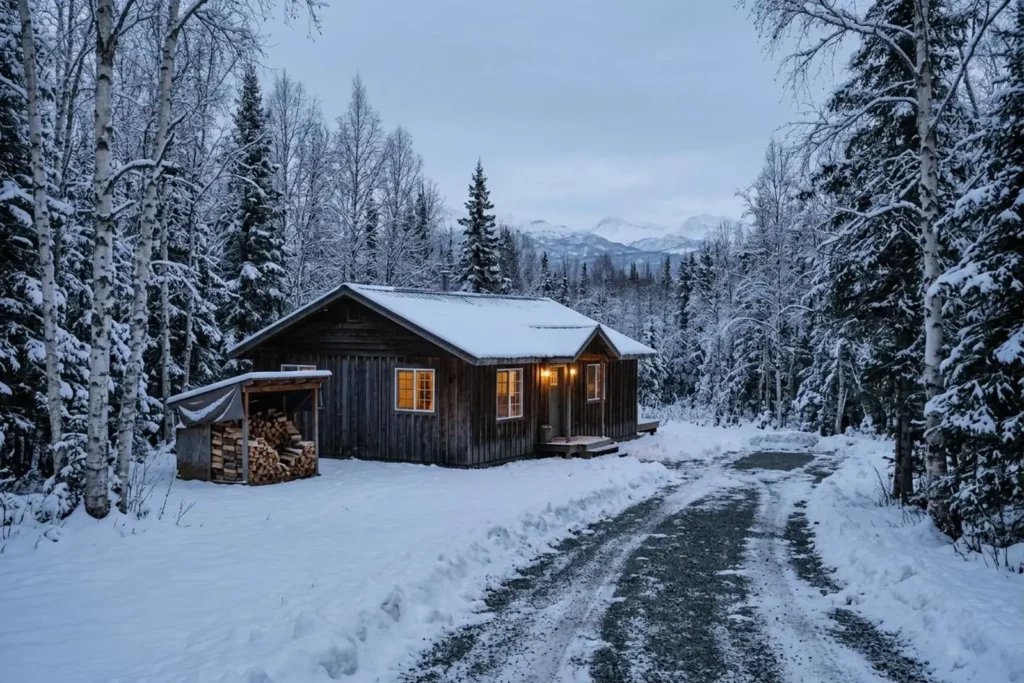
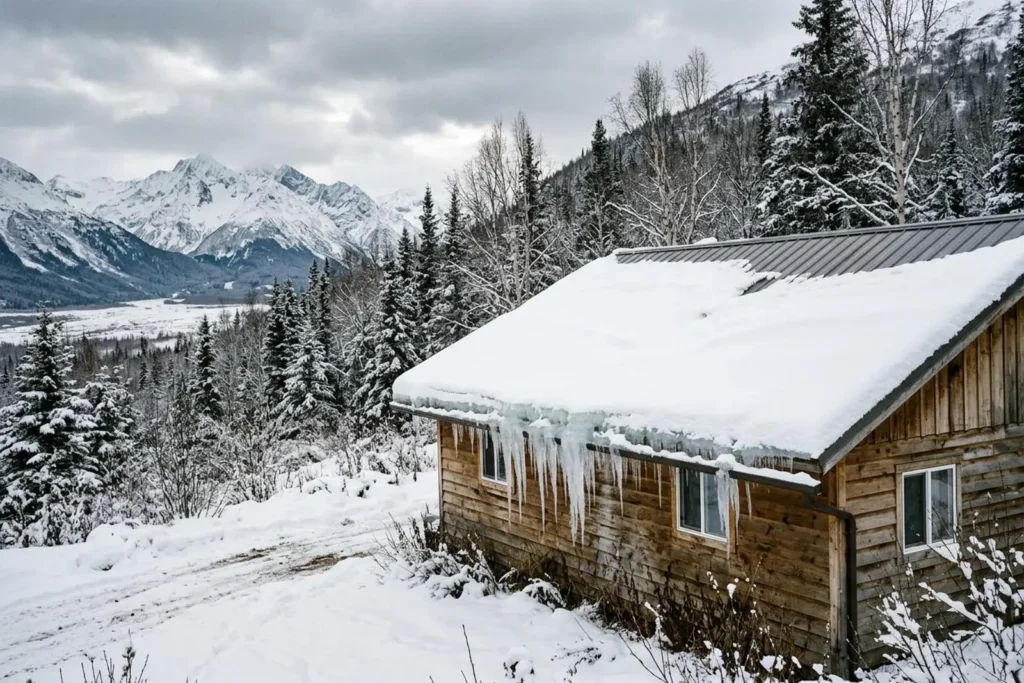
Ice dams form when heat leaking from the house warms the roof deck, melts the snow from underneath, and the water refreezes at the cold eaves. Ice dam prevention comes down to air sealing, insulation and ventilation in the attic. Snow load is a separate question: no single number fits every roof, so learn the warning signs and clear snow from the ground.
What causes ice dams
An ice dam starts with heat. Warm air reaches the underside of the roof, the snow touching the deck melts, and the water runs down to the colder overhang and freezes. The U.S. Department of Energy’s Building America Solution Center calls air leakage into the attic one of the greatest sources of ice dams.
The Alaska Housing Finance Corporation (AHFC) Alaska Residential Building Manual describes two roof types:
- Cold roof: a ventilated attic above the insulation, with continuous 2-inch vent slots at the eaves and louvres at the gables. AHFC says a well-built cold roof should have no ice dams or icicles, and calls it the best option for Southcentral and the Railbelt, where snow can sit on roofs for four to five months.
- Hot roof: no ventilated space, such as a cathedral ceiling packed with insulation. As snow deepens, the deck can rise above freezing.
AHFC says water trapped behind the ice can leak under shingles into the roof cavity, delaminate the deck, rot rafters and stain ceilings.
How to spot an ice dam
Look for a ridge of ice and icicles along the eaves, then check inside.
- Ice at the eaves. UAF Cooperative Extension’s guide to insulating an existing house says it means warm air is leaking into the roof cavity or the roof is underinsulated.
- Stains and spring leaks. The same guide lists ceiling moisture stains and water leaking out of electrical outlets during the spring thaw.
- Frost in the attic. AHFC warns that moisture can build up as frost in the insulation or ice on the underside of the deck.
- A roof that clears too fast. FEMA’s Snow Load Safety Guide (P-957) notes that a well-insulated roof keeps more snow. If yours melts bare while similar roofs stay white, heat is getting through.
Ice dam prevention: seal, insulate, ventilate
Lasting ice dam prevention keeps the roof deck as cold as the outside air, so heat from the house never reaches the snow.
- Air seal first. UAF Extension says to finish air sealing before adding insulation. AHFC lists the usual leaks: plumbing stacks, electrical outlets, partition top plates, chimneys, flues and attic hatches.
- Insulate, including the eaves. AHFC says attics in energy-efficient houses usually reach R-38 to R-60, or 12 to 18 inches of insulation, and lists more insulation at the eaves as a key upgrade.
- Keep soffits open. UAF warns not to block soffit vents with new insulation; baffles keep the air path clear. The Building America guide says a 2-inch air space beats the 1-inch code minimum against ice dams.
- Keep heat out of the attic. Building America recommends putting ducts and heating equipment in heated space.
- Protect the eaves. A self-adhering membrane under the roofing keeps backed-up water out. The City of Palmer lists ice and water shield as required in its minimum building design parameters.
How much snow can a roof hold in the Mat-Su?
It depends on the roof’s design, and there is no borough-wide number. The City of Palmer publishes a minimum ground snow load of 40 pounds per square foot (psf) and a minimum roof snow load of 50 psf.
Outside Palmer, the Mat-Su Borough’s fire code page says state plan review covers fire and life safety, not structure, and exempts housing of three units or fewer. The City of Wasilla reviews its single-family dwelling permit under its land development code, and we found no published design snow load on the city’s pages.
Under AS 18.56.300, AHFC will not make or buy a loan on housing started after June 30, 1992, unless it meets the applicable building code and was inspected at five stages, including framing and insulation. AHFC’s inspection guidelines document this on Form PUR-102, which gets recorded. Ask whether one exists.
What snow weighs
FEMA puts a foot of fresh snow at 3 psf when light and dry and 21 psf when wet and heavy. An inch of ice weighs a little under 5 psf, a foot about 57 psf. UAF Extension’s “How much snow?” adds a rule of thumb: each inch of water in the snow weighs about 5.2 psf.
FEMA cautions that ground snow weight is not the roof load. Wind drifts snow onto lower roofs and into valleys, sliding snow piles up below, and ice dams add weight at the eaves.
Totals swing widely. NOAA records for the Matanuska Experimental Farm near Palmer, available through the National Weather Service NOWData tool, show 83.3 inches of snow in 2022–23, including 17 inches on December 12, 2022, and 18.2 inches in 2024–25.
Signs a roof is overloaded
FEMA says overstressed roofs usually give warning. If you see any of these, it advises leaving the building and calling a local building authority or qualified design professional:
- Sagging ceilings or roof framing, or bowing trusses
- Popping, cracking or creaking noises
- Doors or windows that suddenly will not open or close
- Cracked wood members, or cracks in walls or masonry
- Severe roof leaks
Roof snow removal: stay on the ground
The safest roof snow removal happens from the ground with a long-handled, non-metallic roof rake. Do not chip at ice dams; FEMA says to avoid sharp tools such as picks.
The Occupational Safety and Health Administration (OSHA) says falls cause the most worker deaths and injuries in rooftop snow removal: off edges, through skylights and from ladders. It recommends staying off the roof whenever possible. FEMA adds:
- Leave at least 2 inches of snow to protect the roof covering.
- Use plastic shovels, never machines, on a roof.
- Metal rakes can damage roofing and risk electrocution.
- Roof snow can slide at any moment. Stay outside the slide zone and watch for icicles.
Our winterizing guide covers keeping falling snow off gas meters and oil tanks.
When to call a pro
Call a professional for deep snow, a steep or high roof, ice backing water into the house, or any overload sign. FEMA recommends a licensed, insured roofing contractor with snow removal experience, and an engineer if you are unsure what the roof can carry.
AS 08.18.011 bars anyone from working as a contractor in Alaska without state registration, so ask for the number. Policies differ on ice dam leaks and snow damage, so ask your insurance agent what yours covers before the next storm.
Ice dams when buying or selling
Alaska’s seller disclosure form asks about ice dams by name. AS 34.70.010 requires sellers to deliver it before the buyer makes a written offer, and the current form (08-4229) asks about ice damming, water leaks, and the roof’s type and age.
Under AS 34.70.120, the first sale of a never-occupied home is exempt. Buying new construction? Ask the builder for the plans, the design roof snow load, how the attic is vented, and the PUR-102 or certificate of occupancy. Browse current listings on our live map search.
Buying or selling a home in the Mat-Su this winter? Alaska Realty & Investments can help you ask the right questions about the roof, attic and disclosure before you commit. Contact us, or call or text 907-414-0946.
Frequently Asked Questions
What causes ice dams on a roof?
Heat escaping from the house warms the roof deck and melts the snow sitting on it. The meltwater runs down to the colder eaves and refreezes into a ridge of ice. More water then pools behind that ridge and can leak under the shingles into the attic, walls and ceilings. Air leaks into the attic are one of the biggest causes.
How do you prevent ice dams in Alaska?
Keep the roof deck cold. Seal air leaks from the house into the attic first, then add insulation, including at the eaves. Keep soffit vents open with baffles so outside air flows under the roof. AHFC’s building manual calls a ventilated cold roof the best option for Southcentral Alaska, where snow can stay on roofs for months.
How much snow can a roof hold before it collapses?
It depends on the roof’s design, so there is no single answer. The City of Palmer sets a 50 psf minimum roof snow load for new buildings. FEMA estimates a foot of fresh snow weighs 3 to 21 psf, and a foot of ice about 57 psf. Watch for sagging, creaking, cracking and doors that stick.
Should I shovel snow off my roof?
Only if it is needed, and from the ground if you can. Use a long-handled, non-metallic roof rake, leave at least 2 inches of snow, and stay out of the slide zone. Do not chip ice with picks or other sharp tools. OSHA says falls cause the most worker deaths and injuries in rooftop snow removal, so hire a registered contractor for steep or high roofs.
Do Alaska home sellers have to disclose ice dams?
Most do. AS 34.70.010 requires sellers of residential property to give buyers a disclosure statement before a written offer, and the state form asks whether the seller knows of any ice damming on the roof or water leaking into the home. The first sale of a never-occupied new home is exempt under AS 34.70.120, and buyers and sellers can waive it in writing.
Sources
- U.S. Department of Energy, Building America Solution Center (PNNL): Construct Roofs and Attics for Ice Dam Prevention
- Alaska Housing Finance Corporation: Alaska Residential Building Manual, Chapter 7: Attics and Roofs
- Alaska Housing Finance Corporation: AHFC New Construction Inspection Guidelines
- University of Alaska Fairbanks Cooperative Extension Service: Insulating an Existing House (EEM-04452)
- University of Alaska Fairbanks Cooperative Extension Service: How much snow?
- Federal Emergency Management Agency: Snow Load Safety Guide (FEMA P-957)
- Occupational Safety and Health Administration: Falls and Other Hazards to Workers Removing Snow from Rooftops
- City of Palmer: New Building Project: Minimum Building Design Parameters (archived copy)
- Matanuska-Susitna Borough: Fire Code and Life Safety
- City of Wasilla: Single-Family Dwellings Permit Application Instructions
- National Weather Service: NOWData, Anchorage forecast office (Matanuska Experimental Farm station)
- Alaska Legislature: AS 18.56.300, Construction standards for housing eligible for purchase of loans
- Alaska Legislature: AS 08.18.011, Registration required
- Alaska Legislature: AS 34.70.010–34.70.120, Disclosures in residential real property transfers
- Alaska Real Estate Commission: Residential Real Property Transfer Disclosure Statement (08-4229)