Getting a house ready to sell in the Mat-Su takes more than paint. Selling a house in Alaska means buyers and their lenders want paper: the state seller disclosure, well and septic records, heating service history, permits for additions, and proof the place is reachable in winter. Start six to eight weeks before you list, because some records take weeks to find or fix.
Getting a house ready to sell starts with the state disclosure
Alaska law requires you to deliver a completed disclosure statement before the buyer makes a written offer (AS 34.70.010). The form is the Real Estate Commission’s 13-page Residential Real Property Transfer Disclosure Statement (08-4229).
- It takes good faith, not a professional inspection.
- After a reasonable effort, an unknown item can be a clearly labeled approximation (AS 34.70.040).
- You are not liable for a defect you disclose (AS 34.70.030).
- A buyer who gets the statement after their offer can cancel within three days of in-person delivery, or six days if mailed (AS 34.70.020).
The questions are built for Alaska houses: well depth, flow rate and test date; septic type and who approved it; heating system age and last cleaning; buried oil tanks; average monthly fuel and utility costs; frozen lines; ice damming; permafrost; road maintenance; and permits for remodels. Our for sale by owner guide covers waivers, exemptions and lead-based paint.
Well: pull the log and test the water
No state law requires a well test before a sale, but the disclosure asks when the water was last tested, and a buyer’s lender can require one.
The Alaska Department of Environmental Conservation (DEC) says the state does not test or regulate private well water. It recommends nitrate and coliform bacteria tests at least yearly, plus arsenic in certain areas, and tells owners to keep the well log, pump test, maintenance and water test records. Find your log in the state’s WELTS database. Drillers must file within 45 days of finishing a well, but DEC notes that does not always happen.
For FHA buyers, HUD’s Handbook 4000.1 sets the floor:
- Water must meet the local health authority’s standards, or EPA’s where none exist. A test is required in certain cases, such as when the appraiser reports a deficiency, not on every existing home.
- A disinterested third party must collect the sample. The owner may not.
- An existing well must deliver at least three gallons per minute, and sit at least 50 feet from a septic tank and 100 feet from a drain field (75 if local rules allow).
Septic: find the DEC paperwork before a buyer does
If your buyer is financing, DEC says the lender will very likely want septic documentation, so find it before you list.
Per DEC’s real estate guidance:
- Records are filed by legal description, not address, in DEC’s EDMS database. Only Anchorage and Valdez keep their own.
- A paper search request costs $25 and can take 5 to 10 working days.
- If no record exists, documenting the system takes an engineer’s inspection and report ($115 registration for a conventional system). If a plan is needed, DEC’s review takes 30 days.
- The common snag is bedrooms. A system documented for three under a house marketed as four needs an engineer’s sign-off.
For AHFC-purchased loans, Seller/Servicer Memorandum 23-19 accepts DEC construction documentation from an engineer or certified installer, an engineer’s inspection report, or a DEC Approval to Operate.
Gather pumping and repair receipts. DEC suggests buyers check steel tanks over 15 years old for corrosion. Mark the tank lids before snow buries them.
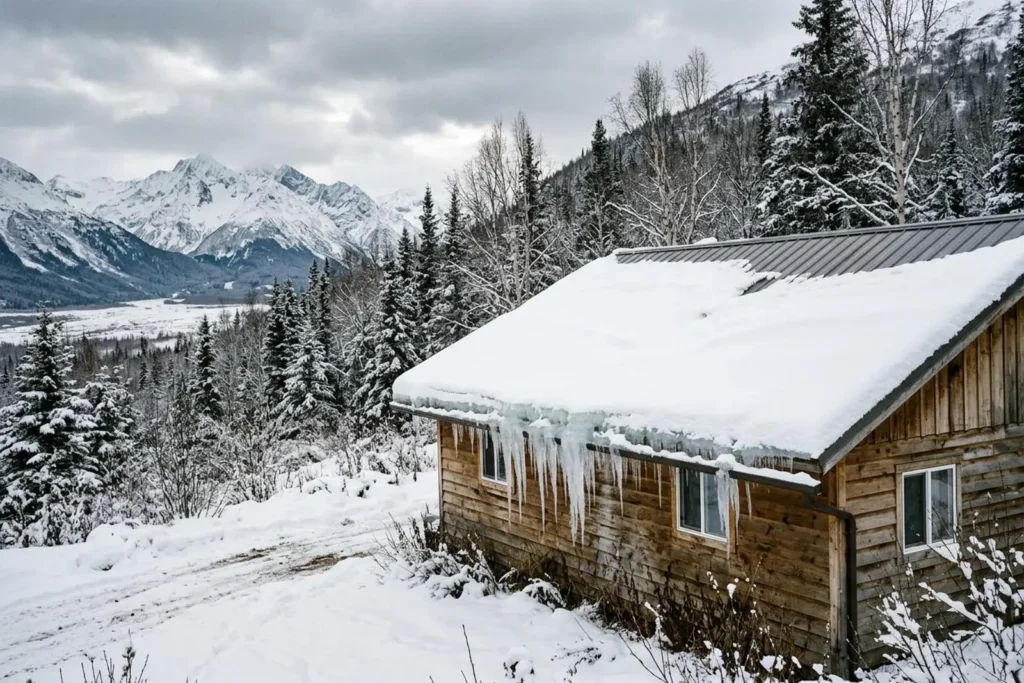
Roof, snow and ice dams
The disclosure asks about ice damming and leaks, and an FHA appraiser must report a roof with less than two years of remaining life.
When snow hides the roof, an FHA appraiser must say why and report on the attic and ceilings instead, so keep the hatch reachable. For snow removal and ice dams, see our winterizing guide.
Driveway and winter access
Inspectors must reach the house, and the driveway has paperwork. A driveway onto a borough road needs a Mat-Su Borough driveway permit ($60).
- That includes an existing driveway that was never permitted: the borough says to apply to bring it into compliance.
- Private roads need no borough permit, and city-limit properties in Palmer, Wasilla and Houston typically do not either.
- FHA requires an all-weather road usable at all times. A private road needs a recorded easement or similar protection, and the appraiser asks about a maintenance agreement.
The disclosure asks who maintains the road, so find any agreement now. Keep paths plowed to the well house, septic lids, fuel tank and meter.
Heating system: service it and keep the record
Have the heat serviced before you list and keep the receipt. The disclosure asks the system’s age, when it was last cleaned and inspected, whether a propane tank is leased or owned, and when the chimney was last cleaned and by whom.
For an FHA buyer, permanent heat must keep living areas at 50°F or more automatically, without human intervention for long periods. The disclosure also asks about energy ratings.
See your competition on our live map search.
Permits for additions and remodels
The disclosure asks whether remodels and additions had permits and final inspections. Outside the cities, houses are exempt from the borough’s building plan review, so the records that matter are different.
- Borough. The fire and life safety division exempts residential properties of a triplex or smaller. A mandatory land use permit applies to building within 75 feet of a waterbody.
- Wasilla. A land use permit is typically needed, including for adding onto a building.
- Palmer. AHFC lists Palmer as an approved municipality, accepting the city’s building inspection for new homes.
- AHFC financing. Homes built on or after July 1, 1992 must meet the Alaska Minimum Construction Standards. Find your PUR-102 inspection summary.
A new bedroom also loops back to the septic record.
Listing photos: winter or wait for summer?
You do not have to wait. A warm, plowed, well-lit house photographs fine in winter. The cost is short days and a yard under snow.
Wasilla gets about 5 hours and 19 minutes of daylight at the December solstice (NOAA), so book exterior shots near midday. Good summer photos of the yard or view can run alongside current ones if you say which season they show.
Repairs or credits?
Fix what can stop a loan, disclose what you know, and consider a credit for the rest. When an FHA appraiser flags heat, roof life, well water or access, a price credit alone does not satisfy it. The repair gets done, or in limited cases escrowed, and FHA caps seller contributions toward a buyer’s costs. Inspection reports generated under the purchase agreement become a disclosure addendum once delivered to the buyer.
Pre-list timeline: how to prepare a house to sell
| When | What to do |
|---|---|
| 8 weeks out | Search DEC septic records and WELTS. Gather permits, PUR-102, easements and the driveway permit. |
| 6 weeks out | Test the well. Pump and inspect the septic. Service the heat and chimney. |
| 4 weeks out | Check roof and attic. Decide repairs versus credits. Pull a year of bills. |
| 2 weeks out | Complete the disclosure. Mark septic lids. Book photos. |
| Before any offer | Deliver the disclosure, in person or by mail. |
Planning to sell your house in Wasilla or elsewhere in the Valley? Our sell my home page explains how we prepare and market listings.
Getting ready to sell? Alaska Realty & Investments can help you sort out which records your buyer’s lender will want. Gino Paoletti, our Associate Broker, has been licensed in Alaska since 2009. Contact us, or call or text 907-414-0946.
Frequently Asked Questions
When do I have to give the buyer the Alaska seller disclosure?
Before the buyer makes a written offer. AS 34.70.010 requires sellers of single-family homes and duplexes to deliver the completed state form first, in person or by mail. If it arrives after an offer, the buyer can cancel within three days of in-person delivery or six days if mailed.
Do I need to test my well before selling a house in Alaska?
No state law requires it, but the disclosure asks when the water was last tested, and lenders can require a test. DEC recommends nitrate and coliform tests at least yearly, plus arsenic in some areas. For an FHA loan, a disinterested third party must collect the sample.
What septic records do I need to sell a house in the Mat-Su?
Start with DEC’s record of your system, searchable by legal description in its EDMS database. Check that it shows the current legal description and the bedroom count you are marketing. If no record exists, documenting the system takes an engineer’s report to DEC. Add pumping and repair receipts.
Do I need a building permit for an addition in the Mat-Su Borough?
Outside Palmer, Wasilla and Houston, the borough’s building plan review exempts houses up to a triplex, but building within 75 feet of water needs a land use permit. Wasilla typically requires a land use permit for additions. AHFC financing has its own inspection standards for homes built since July 1, 1992.
Should I list my Mat-Su house in winter or wait for summer?
Winter listings work if the house is warm, plowed and easy to reach. Wasilla gets about 5 hours and 19 minutes of daylight at the December solstice, so shoot exteriors near midday. Good summer photos of the yard or view can run alongside current ones, labeled by season.
Sources
- Alaska Legislature: AS 34.70.010–34.70.200, Disclosures in Residential Real Property Transfers
- Alaska Real Estate Commission: Residential Real Property Transfer Disclosure Statement, form 08-4229 (Rev. 05/2024)
- Alaska Department of Environmental Conservation: Private Drinking Water Wells & Systems
- Alaska Department of Natural Resources: Well Log Tracking System (WELTS)
- U.S. Department of Housing and Urban Development: FHA Single Family Housing Policy Handbook 4000.1 (revised 8/12/2026)
- Alaska Department of Environmental Conservation: Onsite Wastewater Systems in Real Estate Transactions
- Alaska Housing Finance Corporation: Seller/Servicer Memorandum 23-19
- Matanuska-Susitna Borough: Driveway Permits
- Matanuska-Susitna Borough: Fire and Life Safety Division
- Matanuska-Susitna Borough: Mandatory Land Use Permit
- City of Wasilla: Planning Department FAQs
- Alaska Housing Finance Corporation: Approved Municipalities
- Alaska Housing Finance Corporation: Alaska Minimum Construction Standards
- Alaska Housing Finance Corporation: Energy Efficiency
- NOAA Global Monitoring Laboratory: Solar Calculator