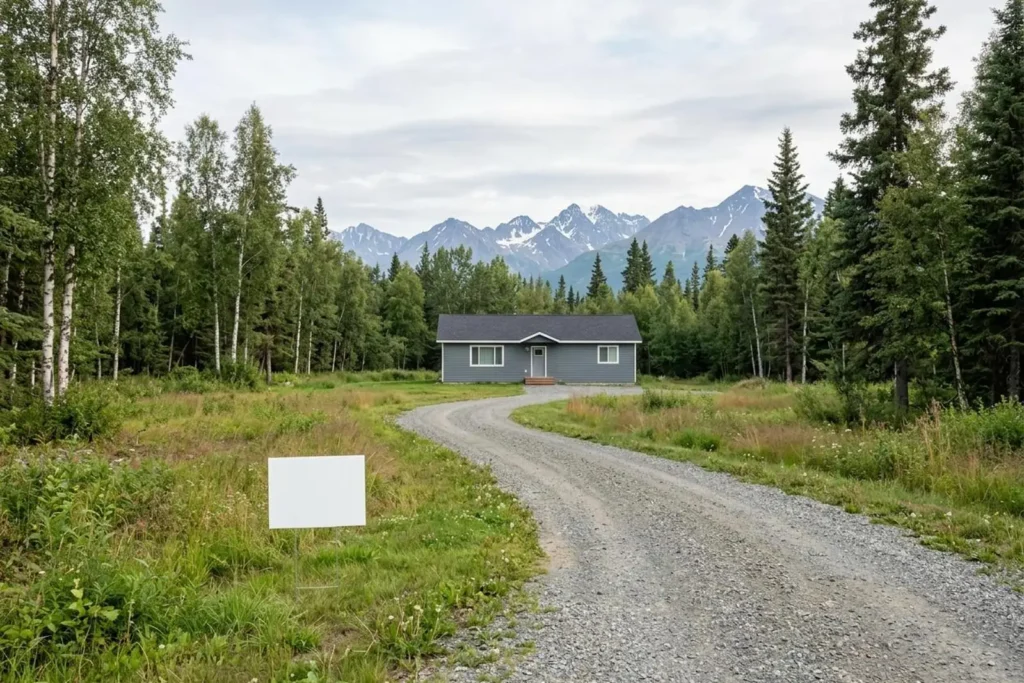
Yes, you can sell your own house. For sale by owner in Alaska takes no license. It does not excuse you from the law, either. You still owe the buyer a state disclosure statement, a lead-based paint disclosure if the house went up before 1978, and clear title at closing. Here is what the state requires, what is up to you, and the point where an agent starts earning the fee.
Can You Sell a House Without a Realtor in Alaska?
Yes. Alaska’s real estate licensing law does not apply to a person selling real estate they own, as long as they are not taking a share of a licensee’s commission (AS 08.88.900).
The law does not change. The person doing the work does:
| Task | Who handles it on a FSBO sale |
|---|---|
| Pricing | You, often with a paid appraisal |
| Disclosure statement | You (required by state law) |
| Marketing and showings | You |
| Purchase agreement | You, ideally drafted or reviewed by a real estate attorney |
| Earnest money, title search, closing | A title company |
| Recording the deed | The title company, with the state Recorder’s Office |
Alaska Real Estate Disclosure: What the Law Requires
This is the form that trips up owner-sellers, and it is not optional. Under AS 34.70, you must deliver a completed disclosure statement, in person or by mail, before a buyer makes a written offer. The Alaska Real Estate Commission sets the form: the Residential Real Property Transfer Disclosure Statement, form 08-4229 (revised 05/2024).
- What it covers. Single-family homes and duplexes, including a manufactured home that has become real property.
- Exemptions. A first sale of a home that has never been occupied is exempt. Buyer and seller can also waive it in writing, but that does not cancel other disclosure duties.
- Late delivery. Hand it over after the offer and the buyer gets a door out. They can cancel in writing within three days of in-person delivery, or six days if it was mailed.
- Changes. If something becomes inaccurate later, deliver a written amendment.
- Liability. You are not liable for a defect you disclosed. Negligent failures can cost you the buyer’s actual damages. Willful ones can cost up to three times actual damages, plus court costs and attorney fees.
No inspection is required to fill it out. Good faith is. The questions are built for Alaska houses: well depth and flow rate, septic or holding tank type, frozen lines, permafrost or settling, flood zone, and who, if anyone, maintains the road.
Lead-Based Paint (Homes Built Before 1978)
Older house, second form. Federal rules cover most homes built before 1978. Per the EPA, you must:
- Give the buyer the pamphlet Protect Your Family From Lead in Your Home.
- Disclose any known lead-based paint or hazards, and hand over any reports you have.
- Allow the buyer 10 days to test, unless you both agree in writing to a different period or a waiver.
- Include the Lead Warning Statement in the contract, and keep signed copies for three years.
Wells, Septic and Other Alaska Checks
Many Valley homes run on a private well and a septic system, and the buyer’s bank will want paperwork on both. The Alaska Department of Environmental Conservation’s guidance on onsite wastewater systems in real estate transactions says a financing lender is very likely to want septic documentation. Dig it out early. Check that it matches the home’s bedroom count and legal description. A system documented for three bedrooms under a house marketed as four is a common snag, and it surfaces two weeks before closing.
In Gino’s experience, it comes down to the loan. FHA and VA lenders will usually call for well and septic testing, and conventional loans often don’t. Most Valley buyers ask for both either way, and the tests are typically a seller cost, so budget for them up front.
Selling in Anchorage, Eagle River or Chugiak? The Municipality of Anchorage requires a Certificate of On-Site Systems Approval for most title transfers of homes served by a well or septic system. A registered engineer must certify the systems, so order it early. Elsewhere, ask your title company and the buyer’s lender what they need.
Pricing Without Public Sales Data
Here is the part most online FSBO advice gets wrong for this state. Alaska does not require sale prices to be disclosed, so there is no public record of what the house down the road actually sold for. The Alaska Municipal League notes that assessors rely on voluntary questionnaires as a result.
That leaves you three ways to find a number:
- A pre-listing appraisal. An independent appraiser has access to sales data and gives you a defensible number.
- Your assessed value, with caution. The borough assessor values property as of January 1 each year (AS 29.45.110). It is a starting point, not a list price.
- Active listings. Not sale prices, but they show your competition.
See who you are up against: browse current listings on our map search.
Marketing a Home For Sale by Owner in Alaska
Good photos, an honest description and a floor plan do most of the work. Then answer the questions Alaska buyers ask before they ask them: heating source and what it costs to run, well and septic, who plows the road, garage and lot size.
- Fair housing applies to owners. The federal owner exemption for single-family homes is lost if an ad states a discriminatory preference (42 U.S.C. 3603). Describe the home, not the buyer you want.
- MLS access requires a licensee. Some brokerages offer limited-service MLS listings. Under Alaska law, a licensee’s core duties, like reasonable skill and care, cannot be waived (AS 08.88.615 and 08.88.625). Ask exactly what the fee covers.
Buyer’s Agents and Compensation After the NAR Settlement
Most buyers show up with an agent, and somebody pays that agent. The rules on who changed in 2024:
- Since August 17, 2024, offers of buyer-agent compensation can no longer appear in MLS listings, and agents must have a written agreement with a buyer before touring a home (NAR; CNN).
- Sellers are not obligated to pay the buyer’s agent, but may still agree to it off the MLS or offer concessions. If the seller doesn’t, the buyer may owe the fee. Commissions are negotiable (NAR; CNBC).
- A federal court approved the settlement in November 2024, and the Eighth Circuit upheld it on August 19, 2026 (HousingWire).
Alaska law adds its own line: a buyer’s agent is not obligated to show a buyer a property unless there is a written agreement to pay that agent (AS 08.88.620). Decide your policy before the first phone call, and put any agreement in writing.
Contract, Title, Escrow and Recording
The purchase agreement is where a FSBO sale gets expensive. It should cover price, earnest money, financing and inspection contingencies, deadlines, included items and possession. Have a real estate attorney draft or review it.
Close through a title company. It holds the earnest money, searches title for liens, issues title insurance and handles the closing.
The deed is recorded with the Alaska DNR Recorder’s Office. Most Mat-Su properties fall in the Palmer or Talkeetna recording district; the DNR district map confirms which. Recording costs $20 for the first page and $5 for each additional page (DNR fee schedule). The office doesn’t provide deed forms or legal advice. Most Alaska title companies can e-record for you.
When an Agent Is Worth It
FSBO works best when you already have a buyer (a neighbor, a tenant, a relative), the property is simple, and you have the time for showings and paperwork.
An agent tends to earn the fee when:
- Pricing is uncertain, which in a non-disclosure state is often.
- The property is unusual: acreage, waterfront, off-grid, or a well or septic question.
- You are moving out of state and cannot run showings.
- You want full MLS exposure and help sorting multiple offers.
Our sell my home page explains how we list and market Mat-Su homes.
Weighing FSBO? Talk it through with Alaska Realty & Investments before you list. Gino Paoletti, our Associate Broker, has been licensed in Alaska since 2009 and handles residential and commercial sales. We will tell you straight whether selling on your own fits your situation. Already found your buyer and agreed on the terms? Gino sometimes handles the paperwork alone for 1% of the price when the whole deal is already negotiated. Ask whether your sale qualifies. Contact us. Or call or text 907-414-0946.
Frequently Asked Questions
Do I need a real estate license to sell my own house in Alaska?
No. Alaska’s licensing law does not apply to a person selling real estate they own, as long as they do not take part of a licensee’s commission (AS 08.88.900). You still must meet the same legal duties as any seller, including the state disclosure statement, federal lead-based paint disclosure for most pre-1978 homes, and a clear title at closing.
What disclosure form do I need to sell a house in Alaska?
Use the Alaska Real Estate Commission’s Residential Real Property Transfer Disclosure Statement, form 08-4229. AS 34.70.010 requires sellers of single-family homes and duplexes to deliver it before the buyer makes a written offer. It asks about wells, septic, frozen lines, permafrost, flooding and road maintenance. Homes built before 1978 also need the federal lead-based paint disclosure.
Can a buyer back out if I deliver the disclosure late?
Yes. Under AS 34.70.020, if the buyer receives the disclosure statement or a material amendment after making a written offer, they can terminate the offer with written notice. They have three days if it was delivered in person, or six days if it was mailed. Delivering the statement before any offer avoids this.
Do I have to pay the buyer’s agent if I sell FSBO in Alaska?
No law requires it. Since the NAR settlement changes of August 17, 2024, buyer-agent compensation is negotiated separately and cannot be offered through the MLS. Sellers may still agree to pay it or offer concessions. If they do not, the buyer may owe their agent. Decide your policy in advance and put any agreement in writing.
How much does it cost to record a deed in the Mat-Su Valley?
The Alaska DNR Recorder’s Office charges $20 for the first page of a document and $5 for each additional page. Most Mat-Su properties are recorded in the Palmer or Talkeetna recording district. If you close through a title company, it will typically record the deed for you, and many Alaska title companies can submit it electronically for a fee.
Sources
- Alaska Legislature: AS 34.70.010–34.70.200, Disclosures in Residential Real Property Transfers
- Alaska Real Estate Commission: Residential Real Property Transfer Disclosure Statement, form 08-4229 (Rev. 05/2024)
- Alaska Legislature: AS 08.88.900, Exceptions and AS 08.88.600–08.88.695, Licensee Relationships and Duties
- Alaska Legislature: AS 29.45.110, Full and True Value
- U.S. Environmental Protection Agency: Real Estate Disclosure (lead-based paint)
- Alaska Department of Environmental Conservation: Onsite Wastewater Systems in Real Estate Transactions
- Municipality of Anchorage: Certificate of On-Site Systems Approval Guidelines
- Alaska Municipal League: Resolution 2019-06, Real Property Sales Disclosure
- Cornell Legal Information Institute: 42 U.S.C. 3603, Fair Housing Act exemptions
- National Association of REALTORS: NAR Settlement FAQs
- CNN: Big changes to how you buy and sell a home go into effect today (Aug. 17, 2024)
- CNBC: Real estate fees settlement created ‘a new competitive ballgame’ (Oct. 1, 2024)
- HousingWire: Eighth Circuit upholds NAR commission lawsuit settlement (Aug. 19, 2026)
- Alaska Department of Natural Resources: Recorder’s Office, Recording Fees, FAQs and e-Recording Information